Radon Mitigation in York, PA
York County's radon risk is real and measurable: a state-run survey of 68 York County homes found 68% tested above the EPA's 4 pCi/L action level, in a county EPA classifies as Zone 1 — its highest radon-risk category.
Homes across York, PA sit on ground the U.S. Geological Survey and EPA both flag for elevated radon potential. That's not a reason to panic — it's a reason to test, and if your numbers come back high, to fix it with a properly engineered system. This page walks through what radon mitigation in York actually involves: the method, the cost, the timeline, and what to expect from a PA DEP-certified installer.
Why Radon Mitigation matters here
York County sits in EPA's Zone 1 — the agency's highest radon-potential category — a read that lines up directly with a state-run EPA/Pennsylvania survey of 68 York County homes, which found an average indoor level of 15.5 pCi/L and 68% of homes tested above the EPA action level of 4 pCi/L. The geology driving it runs through the whole county: a carbonate belt of limestone and dolomite (including the Kinzers Formation) across the lowlands, and slate and schist formations in the uplands — the same rock classes USGS ties to Pennsylvania's highest indoor radon readings. More on the geology at York County radon levels.
How mitigation works: sub-slab depressurization
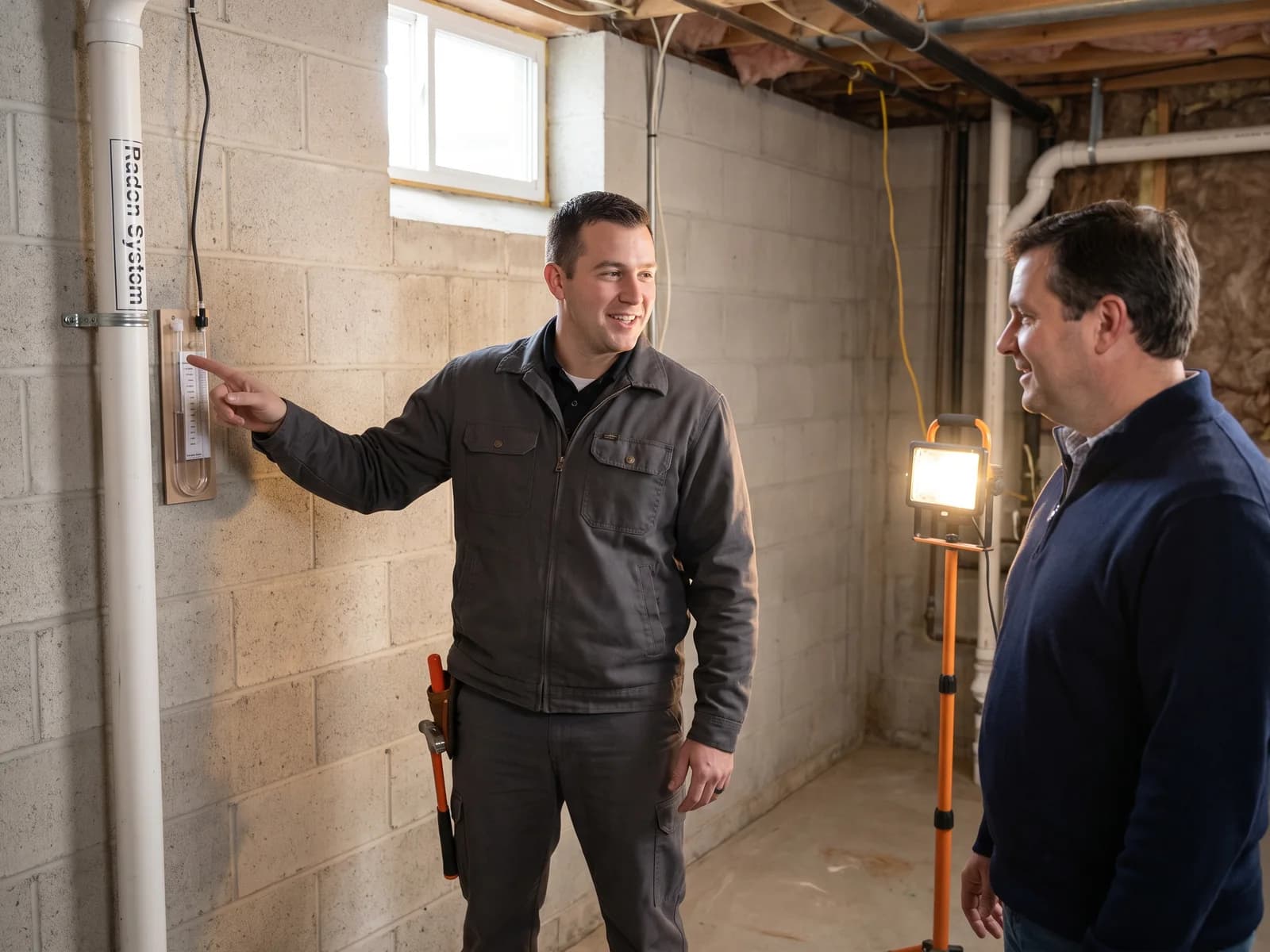
The standard fix, in York and nationally, is active sub-slab depressurization (SSD): a sealed pipe and fan system draws radon gas from beneath the foundation slab and vents it safely above the roofline, before it ever enters living space. Properly installed, SSD systems reduce indoor radon by 50–99%.
Yes — row homes can typically be treated with sub-slab or sub-membrane depressurization; a certified installer adjusts suction-point placement for shared-wall foundations.
York's older row-home neighborhoods and newer suburban single-family construction both get treated with the same underlying method — a certified contractor evaluates your specific foundation type (basement, crawl space, slab-on-grade, or shared-wall row home) and places suction points accordingly.
Most radon mitigation installations are completed in about a day, though homes with multiple foundation types, crawl spaces, or several suction points can take longer.
What it costs
A typical radon mitigation system (active sub-slab depressurization) runs $800–$2,500, averaging around $1,200, depending on foundation type and system complexity, per industry cost guides. EPA itself publishes no specific dollar figure — only that mitigation costs about the same as other common home repairs. Full breakdown on radon mitigation cost.
Who installs it
Pennsylvania requires radon mitigation work to be performed under active PA DEP certification or authorization — by a certified individual, or by a DEP-approved employee of a certified firm — under the Radon Certification Act. That's your baseline check before hiring anyone — verify certification directly with PA DEP rather than taking a contractor's word for it. We connect York County homeowners with certified professionals; we don't perform the work ourselves.
Communities we serve
Looking for local coverage? Start with radon mitigation in Hanover, radon mitigation in Red Lion, and radon mitigation in Dallastown, plus West York, North York, Manchester, Mount Wolf, Dover, Yoe, Loganville, Windsor, East Prospect, Wrightsville, Jacobus, Seven Valleys, Spring Grove, Jefferson, Glen Rock, Shrewsbury, New Freedom, and Stewartstown. Full directory on service areas.
Learn more
- Radon Testing When Buying or Selling a Home in York County, PA
- Radon and Lung Cancer: What York County Homeowners Should Know
- How to Verify a PA DEP-Certified Radon Contractor
Frequently asked questions
How serious is the radon risk in York County?
York County's radon risk is real and measurable: a state-run survey of 68 York County homes found 68% tested above the EPA's 4 pCi/L action level, in a county EPA classifies as Zone 1 — its highest radon-risk category.
Can row homes in York be mitigated for radon?
Yes — row homes can typically be treated with sub-slab or sub-membrane depressurization; a certified installer adjusts suction-point placement for shared-wall foundations.
How long does a Radon Mitigation installation take in York?
Most radon mitigation installations are completed in about a day, though homes with multiple foundation types, crawl spaces, or several suction points can take longer.
Get matched with a PA DEP-certified radon mitigation specialist in York County. Request a Free Estimate — takes under a minute.