York County, PA Radon Levels
A state-run EPA/Pennsylvania survey of 68 York County homes found an average indoor radon level of 15.5 pCi/L, with a median of 6.6 pCi/L — well above the EPA's 4 pCi/L action level.
York County's radon numbers come from a real, state-administered survey — not a marketing estimate. Here's what the data says and why the county's geology explains it. When levels run high, get your home tested or mitigated through a certified pro.
The survey data
Source: the EPA/State Residential Radon Survey of Pennsylvania (USGS Open-File Report 93-292-C, Table 1). York County's results, from 68 homes tested:
| Measure | Result |
|---|---|
| Homes surveyed | 68 |
| Arithmetic mean | 15.5 pCi/L |
| Geometric mean | 7.5 pCi/L |
| Median | 6.6 pCi/L |
| Maximum | 155.6 pCi/L |
| % of homes above 4 pCi/L (EPA action level) | 68% |
| % of homes above 20 pCi/L | 21% |
Cite: EPA/Pennsylvania State Residential Radon Survey via USGS Open-File Report 93-292-C, Table 1.
EPA Zone classification
York County sits in EPA's Zone 1 — the agency's highest radon-potential category, meaning a predicted average indoor screening level of 4 pCi/L or higher. That classification is drawn from indoor measurements, geology, aerial radioactivity, and soil and foundation data — the same category of evidence behind the survey table above, and consistent with it: a county averaging 15.5 pCi/L with 68% of homes over the action level is exactly what a Zone 1 designation predicts.
The geology behind the numbers
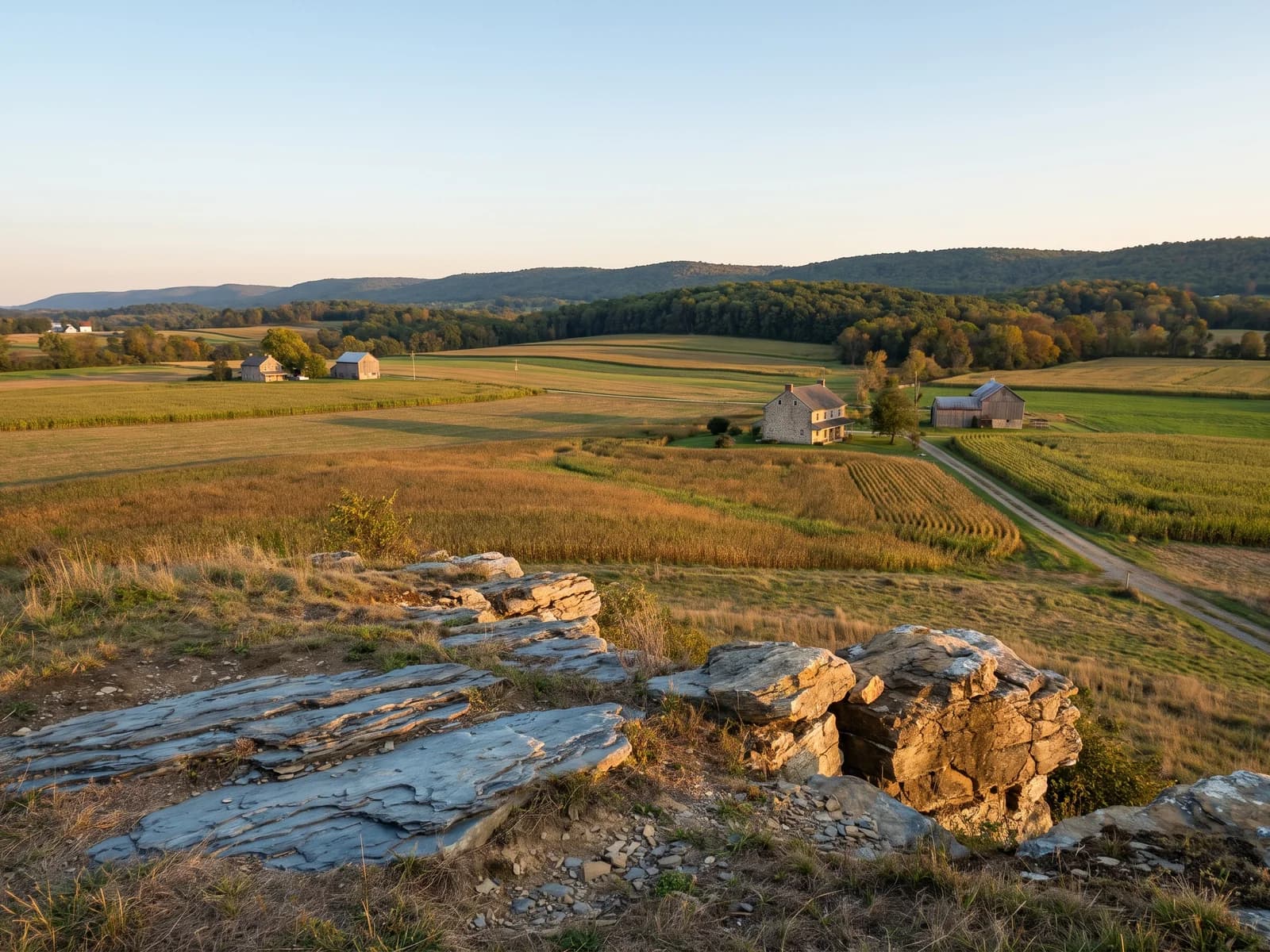
York County's radon risk traces to its Piedmont geology — a carbonate belt of limestone and dolomite (including the Kinzers Formation) across the county's lowlands, and slate and schist formations in its uplands — the same rock classes USGS identifies as drivers of Pennsylvania's highest indoor radon readings.
Yes — southern York County's Piedmont Upland includes slate and schist formations, including the Peach Bottom Formation (per PA DCNR), among the geology classes linked to elevated indoor radon across the Piedmont region.
USGS's regional mapping traces the Peach Bottom slate belt primarily through southern Lancaster and eastern Chester counties, pinching toward the York County line — so for the York County-specific claim, PA DCNR's own county geology report is the more precise source, and it names Peach Bottom Formation roofing slate as a York County mineral resource in its own right.
What this means for your home
County-level data tells you the odds, not your specific number — the only way to know your home's actual reading is a test. See radon testing in York, PA or go straight to radon mitigation in York, PA if you already have a result above 4 pCi/L.
Frequently asked questions
What is the average radon level in York, PA?
A state-run EPA/Pennsylvania survey of 68 York County homes found an average indoor radon level of 15.5 pCi/L, with a median of 6.6 pCi/L — well above the EPA's 4 pCi/L action level.
What EPA Radon Zone is York in?
York County sits in EPA's Zone 1 — the agency's highest radon-potential category, meaning a predicted average indoor screening level of 4 pCi/L or higher.
What type of geology causes high radon in York County?
York County's radon risk traces to its Piedmont geology — a carbonate belt of limestone and dolomite (including the Kinzers Formation) across the county's lowlands, and slate and schist formations in its uplands — the same rock classes USGS identifies as drivers of Pennsylvania's highest indoor radon readings.
Do southern York County homes near the Peach Bottom slate belt have higher radon risk?
Yes — southern York County's Piedmont Upland includes slate and schist formations, including the Peach Bottom Formation (per PA DCNR), among the geology classes linked to elevated indoor radon across the Piedmont region.